Your Ultimate Gardening Companion: The Planner and Logbook
Gardening is a journey of seasons, successes, and sometimes, lessons learned. Whether you're nurturing a few patio containers or managing a sprawling vegetable plot, the details matter. What variety did you plant? When did you last fertilize? Which supplier had the best tomato seeds? Keeping track of these details transforms gardening from a hopeful hobby into a purposeful, productive practice. Enter the Garden Planner and Logbook, a comprehensive tool designed to make garden record-keeping simple and to help you get organized.
Beyond a Simple Notebook: A Structured System for Growth
This isn't just a blank journal. It's a thoughtfully structured system built around the actual needs of a gardener. The core idea is to provide a single, organized home for all the information that typically gets scattered across sticky notes, calendar reminders, and the fading memory of last season. By consolidating everything, you create a valuable reference that grows more useful each year.
Its key strength lies in its combination of planning and logging. You don't just record what happened; you plan what you want to happen. This forward-looking approach helps you anticipate tasks, optimize your space, and set clear goals for each growing season.
What Makes This Garden Logbook Stand Out
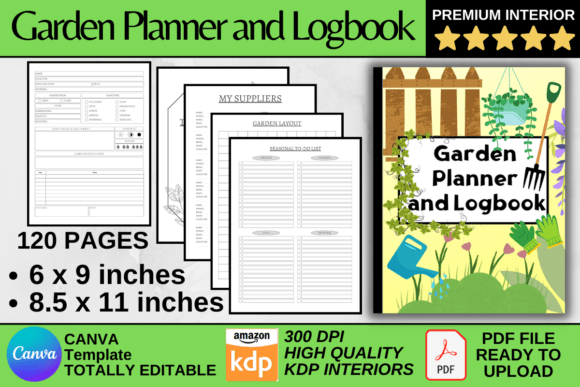
The layout includes purpose-driven pages that guide you through the entire gardening cycle. You'll find dedicated sections for:
- Belongs To Pages: Personalize your logbook right from the start.
- Suppliers’ Info: A crucial, often overlooked section. Record where you bought seeds, tools, or soil amendments, along with notes on quality and service. This saves hours of searching next year.
- Garden Layout Planner Sheets: Visually map out your garden beds, containers, or plots. Sketching your layout helps with crop rotation, spacing, and sun exposure planning—vital for avoiding disease and maximizing yield.
- Yearly Overview: A high-level page to note your overarching goals, major projects, or key lessons from the previous year. It sets the tone for your gardening year.
- Seasonal To-do List: Break down the year into manageable chunks. List your tasks for spring preparation, summer maintenance, autumn harvest, and winter planning. This prevents overwhelm and ensures timely actions.
- Plant Care Sheets with Notes: The heart of the logbook. Dedicated space for each plant or crop to record planting dates, watering schedules, fertilization, observed pests, harvest dates, and personal notes on performance. This builds a plant-specific history that is invaluable.
Practical Power for Every Kind of Gardener
The utility of this Garden Planner and Logbook stretches across a wide range of applications. For the hobbyist, it turns casual gardening into a more rewarding, successful endeavor. You'll learn from your own documented experiences rather than guessing. For the aspiring homesteader or serious vegetable grower, it becomes an operational manual, increasing efficiency and output.
Educators and community garden coordinators can use it as a teaching tool or a shared record for group projects. Creators and bloggers might find the organized data perfect for generating content or tracking experiments for their audience. Even professionals in landscaping or horticulture could adapt it for client garden management or personal project tracking.
The benefits are tangible: usability through a logical flow, efficiency by having all data in one place, and a significant boost to personal productivity. Your garden becomes easier to manage. Furthermore, the act of logging deepens your engagement with the process, making you a more observant and responsive gardener.
A Flexible Tool Ready for Your Needs
Perhaps the most notable quality is its inherent flexibility. You receive a high-quality print-ready professional KDP interior file, perfect for publishing or personal printing. But you also get an editable Canva template link. This means you are not locked into a fixed format.
If you want to add a page for composting records, a chart for rainfall tracking, or a section for garden photography notes, you can do so easily using the free Canva account. This adaptability allows the Garden Planner and Logbook to morph into the exact tool you need, whether your focus is ornamental flowers, organic vegetables, or permaculture principles.
Real-World Applications and Considerations
Imagine planning your spring planting. Instead of rummaging for last year's seed packets, you open your logbook to the Suppliers’ Info and Garden Layout. You see that 'Green Thumb Seeds' had excellent germination rates for your beans, and you recall that the east bed gets more early sun. You then use the Seasonal To-do List to schedule your soil amendment week. When you plant, you immediately start a Plant Care Sheet for that new heirloom tomato, noting the planting depth and variety.
Come midsummer, when a plant shows strange spotting, you check its care sheet. You see you fertilized it two weeks ago—a possible clue. You note the symptom and your action. This precise record becomes a diagnostic tool. By autumn, your logbook is a rich archive of the year's work, ready to inform your planning for next season.
When selecting or using such a tool, consider your primary gardening style. A container gardener might prioritize different details than a row-crop gardener. The editable feature means you can tailor it. Also, think about format: the included files are ready for PDF upload to any POD platform like KDP or Etsy, and are provided in two standard sizes—8.5 × 11 inches and 6 × 9 inches—with a 120-page foundation you can expand. Always test files in platform previewers, as provided here, to ensure perfect formatting.
The ultimate value of the Garden Planner and Logbook is that it turns experience into expertise. It moves gardening from a reactive pastime to a proactive, recorded project. Each entry, each sketch, each note is a step towards a more organized, fruitful, and satisfying garden. It’s the best log book to make garden record-keeping simple because it respects the complexity of gardening itself, giving you the structure to capture it all.