The Homeschool Lesson Planner 2023-2024: Your Central Hub for a Successful Academic Year
For homeschooling parents, the challenge often isn't the teaching itself, but the orchestration. Managing multiple subjects, tracking progress, aligning with goals, and simply remembering what happens next week requires a dedicated system. The Homeschool Lesson Planner 2023-2024 is designed to be that system—a comprehensive, physical anchor for your entire academic year from July 31, 2023, to August 2, 2024. It transforms the often chaotic flow of homeschooling into a structured, visible, and trackable process.
Where the Planner Fits in Your Homeschooling Workflow
Think of your homeschooling as a project with a clear deliverable: your child's education over a defined period. Any successful project requires planning, execution, monitoring, and adaptation. The Homeschool Lesson Planner 2023-2024 sits at the center of this cycle. Before the week begins, it's your planning tool. During the week, it's your real-time tracking and note-taking companion. After the week or month, it becomes your record for assessment and reflection. It bridges the gap between your curriculum resources, your daily activities, and your long-term educational goals.
Core Structure: From Annual Goals to Daily Details
The planner's architecture mirrors a logical project management workflow. It begins with high-level strategy: the Year Primary Goals page. Here, you define what you want the academic year to achieve before diving into the details, ensuring every subsequent plan aligns with these objectives. This is followed by foundational Student Information and Important Dates sections, setting the stage. The Monthly Calendar spreads provide the macro view, ideal for blocking out units, vacations, and field trips.
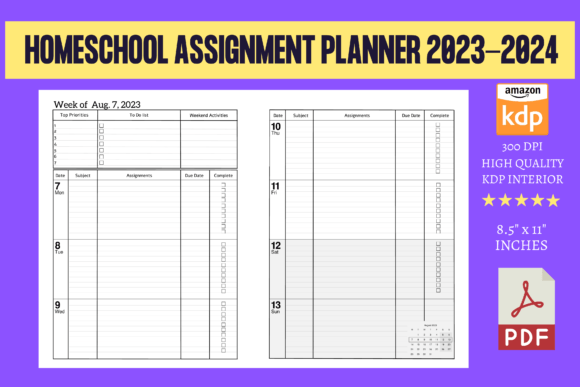
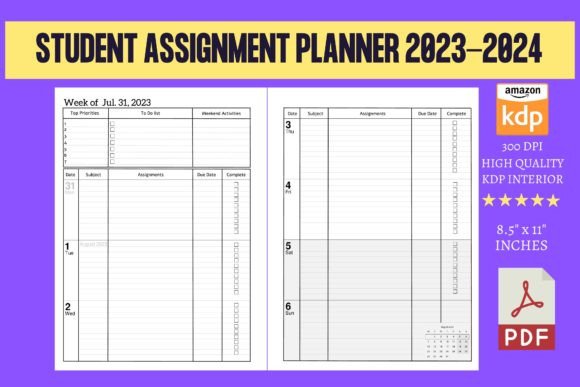
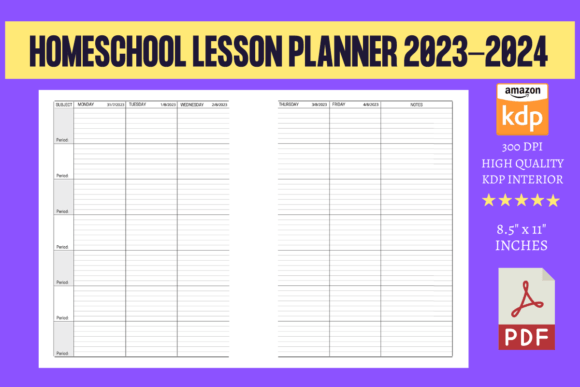
The engine of the planner is the Weekly Lesson Plan pages. With space to detail plans for up to seven subjects, these pages force a necessary discipline. Instead of vague intentions, you commit to specific lessons for Monday through Friday. The adjacent space for a personal to-do list and notes acknowledges that homeschooling is multifaceted; you might need to note "order science supplies" alongside a reminder about a math concept your child struggled with. This integration of teaching tasks and administrative tasks on one view is a key efficiency driver.
Integration with Your Existing Resources and Methods
A tool is only helpful if it works seamlessly with everything else you use. The Homeschool Lesson Planner 2023-2024 is designed as a complementary physical hub for digital or other physical resources. The dedicated Curriculum Resources and Notes pages are perfect for jotting down website URLs, textbook chapter references, or key points from your pedagogical research. The Reading List can be populated from your library visits or online recommendations, keeping it visible and actionable.
In practical use, you might consult your online curriculum portal on Monday morning, translate the weekly objectives into the seven subject slots on your planner, and then work directly from the planner page throughout the day. The planner also interacts with people: the Contact List page keeps co-op leaders, tutors, or specialist teachers at hand, while the Birthdays page helps manage the social aspect of your child's life. It doesn't replace your digital tools; it consolidates their outputs and your intentions into a single, reliable reference point.
Tracking for Accountability and Adaptation
Consistent tracking is what separates an ad-hoc experience from a quality-controlled education. The included Attendance Tracker and Grade Tracker serve dual purposes. First, they fulfill any legal or personal requirements for record-keeping. Second, and more importantly, they provide data. Patterns emerge: perhaps attendance dips in February, or grades in a particular subject fluctuate. This data, housed right next to your lesson plans, allows for informed adaptation. You can see a problem and adjust your upcoming plans in the weekly pages to address it.
The Password Tracker, often an overlooked gem, speaks to the reality of modern homeschooling. Between educational apps, institutional portals, and subscription services, login management becomes a tiny but frequent friction point. Having them securely noted in the planner removes that minor barrier, keeping the focus on learning.
Practical Implementation and Workflow Examples
To integrate this planner smoothly, start with a setup session. Fill the strategic pages (Goals, Important Dates, Birthdays) and the resource pages (Curriculum Resources, Reading List initial ideas) before the year begins. This makes the planner immediately useful and sets your direction. Then, adopt a consistent weekly ritual. Every Sunday evening, review the monthly calendar, populate the next week's seven subject slots based on your resources, and note any to-do items. During each day, keep the planner open on your desk or kitchen table. Use the notes column to capture in-the-moment observations—a child's breakthrough, a resource that was too difficult, an idea for a future activity.
Consider a workflow for a child struggling with fractions. You note the struggle in the weekly notes. Later, you log a lower score on the Grade Tracker for that math unit. When planning the following week, you see both the note and the grade. This informs your plan: you allocate extra time in the "Math" subject slot for review, and perhaps jot "use visual pie chart app" in the to-do list. The planner creates a closed loop of observation, recording, and responsive action.
Design Considerations for Long-Term Usability
The physical design choices directly impact daily usability and long-term value. The large 8.25 x 11-inch (A4) size provides ample writing space without feeling cramped, making it comfortable for detailed entries. The simple, clean interior design avoids visual clutter, reducing cognitive load when you're looking for information. The paper quality and binding should withstand a year of daily handling, ensuring it remains a reliable record you can archive or refer back to later. Its comprehensive nature—from calendars to trackers to lists—means you aren't juggling multiple notebooks or scattered digital files; everything persists in one ordered sequence.
The true benefit of the Homeschool Lesson Planner 2023-2024 is consolidation. It brings goals, calendars, weekly plans, daily logs, resource references, and critical tracking into one unified, tactile object. It reduces the mental overhead of managing a year of education and provides a clear, visual path from your annual aspirations to your daily lessons. By serving as the central hub for your homeschooling process, it shifts your energy from administration to instruction, and from wondering what to do next to knowing exactly what you've done and what you need to do. It is a tool not just for planning lessons, but for successfully managing the complex, rewarding project of your child's homeschool year.